
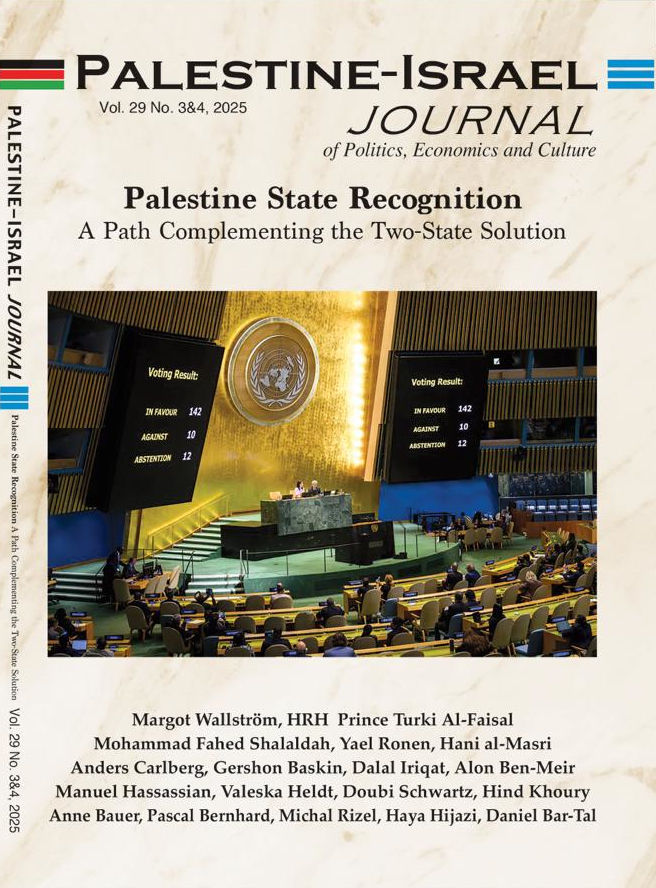
Barring unforeseen circumstances, France, along with several other EU member states, Canada, Australia, and potentially the UK — the very mandate power that issued the Balfour Declaration and played a pivotal role in establishing Israel on the ruins of the Palestinian people — are poised to recognize the State of Palestine. This coming September, the number of countries recognizing Palestine is expected to reach around 160, almost the same number as the 164 countries that recognize Israel.
What tangible weight does such recognition truly bear? Is it a substantive step toward justice or merely a symbolic act intended to ease Western consciences while masking complicity in the war of genocide and starvation, an act that, in practice, smooths the path for the annexation of the West Bank and Gaza and the further displacement of the Palestinian people?
The Palestinian state’s recognition is a debt long overdue, a foundational stone laid by UN General Assembly Resolution 181’s vision of coexisting Arab and Jewish entities. Until Palestine takes its rightful place, Israel’s international legitimacy wears a cloak of incompleteness. Yet, the state that emerged from that very decree swallowed 78% of Palestinian land, far exceeding the boundaries drawn for it by more than 20%.
It is imperative for the Palestine Liberation Organization (PLO) to champion a strategy of international recognition. From its inception, the Palestinian cause has been a global concern, prompting hundreds of international resolutions from the Security Council, General Assembly, and other bodies. However, these have largely gone unimplemented due to U.S. and Western bias favoring Israel. The internationalization strategy gained traction after the Palestinian National Council (PNC) Declaration of Independence at its meeting in Algeria in November 1988, leading to recognition by nearly 100 nations. This momentum quickly stalled, however, giving way to an exclusive focus on negotiations — a grave misstep that effectively handed veto power to Israel and the architects of the “peace process.” This, despite the fact that state recognition is not a concession but an affirmation of the inalienable right to self-determination under international law, a right that is unconditional and non-negotiable.
With each passing decade, negotiations crumbled to dust, and the “peace process” revealed itself as a cunning smokescreen, artfully concealing a relentless Israeli governmental campaign of settlement expansion, land confiscation, and forced exodus of Palestinians. The settler presence in the West Bank grew from a mere 110,000 at the time of the Oslo Accords to a staggering number of over 750,000 settlers today in the West Bank and East Jerusalem, effectively strangling the life out of any prospective Palestinian state unless this entrenched reality is reversed. Conversely, the notion of a singular, democratic, or binational state remains a whispered impossibility, a direct challenge to the very essence of a Jewish state.
The strategy of internationalization and recognition saw a resurgence following the collapse of negotiations, though its achievements remained modest. In 2012, Palestine secured “non-member state” status at the United Nations through a General Assembly resolution, granting it numerous privileges, albeit without voting rights. Both then and now, a more comprehensive approach would have been to address all facets of the Palestinian issue, particularly the refugee question, rather than narrowly confining the conflict to the 1967 borders.
Following the Al-Aqsa Flood’ attacks launched by Hamas on October 7, and as the Western world’s critical gaze on Palestinian resistance softened, a groundswell of popular solidarity has arisen, exerting immense pressure across the West. This burgeoning force has compelled some governments to cross previously uncrossed thresholds: Spain, Ireland, and South Africa, among others, have sealed off arms conduits (Britain), suspended military supplies (Germany), and withdrawn financial stakes (Norway) — culminating in a fresh dawn of Palestinian state recognition from European, Western, and Latin American countries. These profound realignments are exposing a growing rift in Israel’s historical ties with the West, clearing paths for sanctions, and have been termed within Israel a “political tsunami,” which Netanyahu decries as a perverse reward for terrorism and a cruel punishment for the victim.
Nevertheless, recognition, despite its profound symbolic and political significance, is inherently insufficient on its own. It neither terminates the occupation nor actualizes statehood on the ground unless it is coupled with concrete measures against Israel: condemning acts of genocide, imposing sanctions, enacting arms embargoes, activating boycotts, and isolating it, much like the apartheid regime in South Africa was isolated.
Conversely, there is a palpable concern that recognition could devolve into a mere formality, exploited to accelerate normalization and integrate Israel into the region, often contingent on conditions imposed upon the Palestinian victim: cessation of resistance, curriculum changes, and the termination of allocations for prisoners and martyrs. The gravest danger lies in viewing recognition as an end in itself, while the occupation relentlessly expands settlements, annexes the West Bank, and plots the reoccupation of Gaza and the displacement of its inhabitants.
Therefore, from a Palestinian national perspective, a comprehensive and multipronged strategy is indispensable:
• A strategy of steadfastness and resilience for the people and the cause.
• A strategy of resistance, guided by a unified national decision, and international legitimacy.
• A strategy of internationalization and diplomatic engagement that extends beyond mere recognition.
• A strategy of upholding full rights, with the right of return paramount.
• A legal strategy to hold Israel accountable through international courts.
• Boycott and the imposition of isolation on the occupation.
• Transforming global solidarity into a partnership for liberation and justice.
The recognition of statehood is but a single step on a long and winding road, not the triumphant finish line itself. The true North Star guiding this moment remains the dismantling of the occupation and the blossoming of true independence, not the ephemeral shimmer of a state confined to paper. This grand endeavor can only be realized through the bedrock of authentic national unity, a singular guiding hand forged from a common vision and free ballots, and a steadfast partnership with global allies who champion liberty and justice, thereby transforming the enduring occupation into a weight crushing the life out of the occupier, a weight heavier than any f leeting advantage it might offer.
To excessively narrow the conflict to Netanyahu and his current administration is a deceptive oversimplification. This government merely represents the most overt and extreme manifestation of the Zionist colonial settlement project, and the Israeli opposition offers no genuine alternative. Consequently, merely awaiting Netanyahu’s downfall is insufficient; the imperative is to end the Israeli occupation and enable the Palestinian people to practice and materialize their right of self-determination, a task that demands a more resolute and comprehensive Palestinian and international strategy.
Benefits and Drawbacks of International Recognition
A broad Palestinian, Arab, and international discourse has unfolded concerning the recognition of the Palestinian state: Is it a judicious or misguided step? And if judicious, is it sufficient, or must it be inextricably linked to other equally, if not more, critical issues, such as halting the genocide, the war of starvation, and the wholesale devastation of the Gaza Strip, which threatens to render it uninhabitable?
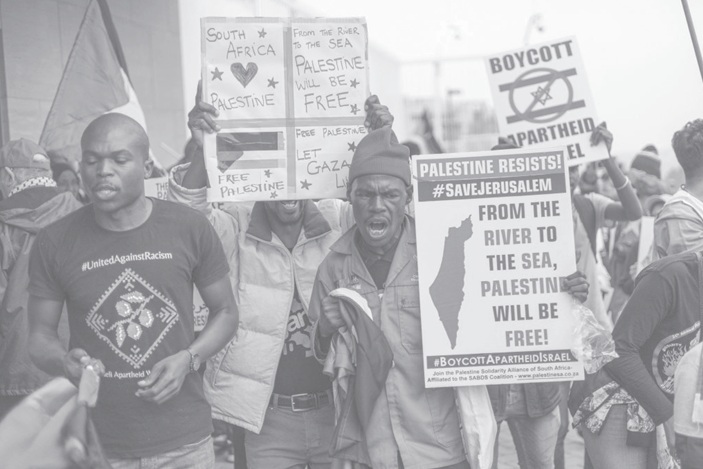
A segment of Palestinians contends that recognition diminishes the Palestinian cause, reducing it to the confines of the West Bank and Gaza Strip, thereby overlooking its fundamental essence: the unity of land, people, rights, and historical narrative. Furthermore, in their view, this recognition offers no guarantee of state establishment, as a state is forged not in the hallowed halls of the United Nations but on the ground. This unfolds while Israel feverishly endeavors to extinguish any prospect of a Palestinian state, instead paving the way for isolated enclaves, disconnected from one another, situated on portions of the West Bank and Gaza Strip and perpetually under Israeli security and sovereign control.
Thus, recognition is viewed as possessing significant symbolic value, yet it remains unattainable on the ground without the forceful termination of the occupation or sufficient international pressure to compel Israel’s withdrawal — an impossibility given the perpetual American veto against any Security Council resolution that might pave the way for full membership for the State of Palestine.
Consequently, it is unacceptable for the role of European and other nations to be confined to mere formal recognition; rather, their acknowledgment must be coupled with an unequivocal condemnation of genocide, starvation, and destruction, and a concerted effort to impose stringent sanctions on the occupying state. These sanctions must encompass arms embargoes, boycotts, and accountability, thereby ensuring the cessation of atrocities in Gaza and preventing their recurrence in the West Bank, the 1948 territories, or even other Arab nations.
The expansionist colonial ambitions of the Israeli Government have become glaringly apparent, whether through its continued occupation of Arab lands in Palestine, Lebanon, and Syria or through its designs to annex parts of Egypt and Saudi Arabia, fueled by the illusion of “Greater Israel from the Nile to the Euphrates” — a refrain echoed by Israeli leaders, including Netanyahu and Smotrich, and emboldened by direct American support, as explicitly articulated by Trump.
A Third Path: The Unseen Current
Some advocate for resistance and complete liberation or a single democratic/binational state rather than recognition, once the colonial apartheid system is dismantled.
Beyond official and radical views, a third perspective champions the unity of cause, land, people, and history, rooted in natural, legal, and historical rights. This commitment allows for transitional approaches. Given Israel’s nuclear might and Western support, its collapse is unlikely. Thus, transitional steps, like a Palestinian state along the 1967 borders, become unavoidable, though success is a distant mirage, dependent on ending the occupation and immense pressure.
The West Bank and Gaza Strip are the current battlegrounds facing annexation, displacement, confiscation, and settlement. The struggle must be confronted. The current Israeli Government seeks to “resolve the conflict,” unlike predecessors who sought merely “to manage” it. The direction can be seen in the 2018 Nation-State Law, West Bank annexation approvals, intensified settlement, forced displacement, and the declaration of this year as “the year of imposing sovereignty.” The Knesset has rejected a Palestinian state, and calls to occupy Gaza, re-establish settlements, and displace residents are escalating.
Conversely, several currents lend strength to the tide demanding statehood, including:
• The vibrant tapestry of Palestinian life, densely woven across the West Bank, East Jerusalem, and Gaza Strip, numbering 5.5 million souls against the sparse scattering of approximately three-quarter of a million settlers.
• The near-unanimous global chorus raised against the annexation of the West Bank and Gaza Strip, a testament to international conscience.
• The tremor of Arab anxieties, particularly in the hearts of Egypt and Jordan, concerning the existential shadow of displacement cast upon Arab national security, a fear that has ignited a fierce opposition, thus far holding back the full sweep of implementation.
• The need for Palestinian internal national unity.
United Leadership Needed
The crimson tide spilled in Gaza serves as the most potent alchemist, transmuting sorrow into a global surge of solidarity. Yet this powerful current, like all tides, is prone to recede as the raw wounds of bloodshed begin to form scabs. Therefore, to harness its fleeting power before it dissipates into the sands of forgetfulness, a unified Palestinian leadership is not merely desirable but an absolute imperative.
This leadership must be a beacon, guided by a program that embodies shared principles, unified institutions, and a singular compass for decision making and armed force, all rooted in the fertile ground of free and fair elections. It must also cultivate a burgeoning garden of kinship with solidarity movements and forge unbreakable alliances with international currents that transcend the mere lament for an end to genocide, actively striving to weave the intricate tapestry of justice for the Palestinian people and empower them to chart their own destiny.
Navigating the Pitfalls: A Labyrinth of Recognition
International recognition, whether from individual states or the Security Council, should not be seen as the ultimate goal. It must not become a pathway to normalization and the integration of Israel into the region without accountability. The most significant danger lies in its potential to be tied to conditions imposed on the Palestinian victim: demands to change curricula, suppress what is termed “incitement,” and cut allocations for prisoners and martyrs’ families. Such concessions would effectively reward the occupying state instead of holding it accountable.
Furthermore, unblinking vigilance is the watchword against the potential machinations Netanyahu might unleash in the coming weeks in a desperate gambit to thwart the rising tide of recognition, especially in the shadow of American threats to penalize those nations that dare to take this step.